
 English
 Español
 عربى
عربى русский
Contact Us
Your email address will not be published. Required fields are marked *
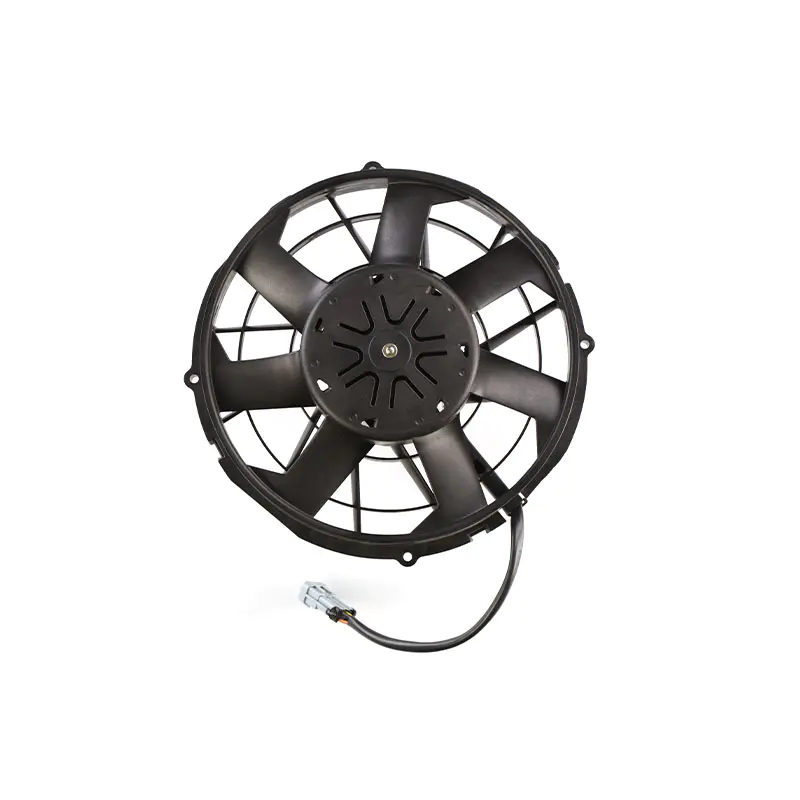
The commutation principle of DC Brushless axial flow fans is based on advanced electronic commutation technology, which completely abandons the mechanical commutator and brushes in traditional brushed motors, thereby achieving more efficient, reliable and quieter operation.
1. Overview of basic principles
The core of the commutation principle of DC Brushless axial flow fans is to accurately control the flow direction and timing of the current inside the motor through an electronic controller, thereby driving the motor rotor to rotate continuously and smoothly. In this process, there is no need for physical contact between brushes and commutators, which reduces mechanical wear and friction and improves the overall efficiency and life of the motor.
2. Key components and functions
Stator and rotor:
Stator: Usually made of laminated silicon steel sheets, with multi-phase windings embedded inside to generate a rotating magnetic field.
Rotor: Made of permanent magnets (such as rare earth magnets), it can generate a constant magnetic field without external power excitation. The rotor rotates under the action of the rotating magnetic field generated by the stator.
Position sensor:
Common position sensors include Hall sensor and photoelectric sensor. These sensors are used to detect the position of the rotor in real time and provide accurate rotor position information to the electronic controller.
Electronic controller:
The electronic controller is the core component of DC Brushless axial flow fans. It controls the power-on sequence and timing of each phase winding through complex algorithms based on the rotor position information provided by the position sensor, thereby realizing the commutation and speed regulation of the motor.
3. Detailed explanation of the commutation process
Position detection:
When the fan starts, the position sensor starts working, detects the position of the rotor in real time, and feeds the position information back to the electronic controller.
Current control:
According to the received position information, the electronic controller generates a specific sequence of square wave currents by controlling the on and off of six MOS tubes (or other power switching devices). These currents pass through the stator windings in turn to generate a rotating magnetic field.
Magnetic field action:
The rotating magnetic field generated by the stator interacts with the permanent magnets on the rotor to generate electromagnetic force and drive the rotor to rotate. As the rotor position changes, the electronic controller continuously adjusts the power-on sequence to ensure that the direction of the magnetic field is always consistent with the direction of rotor movement, thereby achieving continuous rotation.
Commutation realization:
When the rotor rotates to a certain position, the position sensor detects the new position information and sends it to the electronic controller. The electronic controller changes the power-on sequence according to the new position information, so that the direction of the stator magnetic field changes, thereby driving the rotor to continue to rotate in the next direction. This process is repeated continuously, realizing the continuous commutation and rotation of the motor.
IV. Advantages and Applications
DC Brushless axial flow fans have many advantages over traditional brushed fans:
High efficiency: The motor efficiency is significantly improved due to reduced mechanical wear and friction.
Long life: The brushless design extends the service life of the motor.
Low noise: Electronic commutation reduces mechanical vibration and noise.
High reliability: Reduces the risk of downtime caused by brush wear and commutator failure.
Therefore, DC Brushless axial flow fans are widely used in computer cooling, industrial ventilation, automotive air conditioning, household appliances and other fields, becoming the mainstream of modern fan technology.
The commutation principle of DC Brushless axial flow fans is a precise control process based on electronic commutation technology. Through the coordinated work of position sensors, electronic controllers, stators and rotors, the continuous and smooth rotation of the motor is realized. This technology not only improves the performance and reliability of the fan, but also promotes the continuous progress and development of fan technology.
Your email address will not be published. Required fields are marked *

Zhejiang Nicety Electric Machinery Co., Ltd. specializes in the production of four series of products: condenser electronic fan, radiator (water tank) fan, blower, and air conditioner assembly. Professional production American, European, Japanese, Korean And Domestic brand DC automotive axial fans.
Email: [email protected] / [email protected]
Tel: +86-0578-7125439 / +86 181 0658 9231
Address:No. 98, Guangda Street, Jinsha Industrial Zone, Longquan City, Zhejiang Province, China