
 English
 Español
 عربى
عربى русский
Contact Us
Your email address will not be published. Required fields are marked *
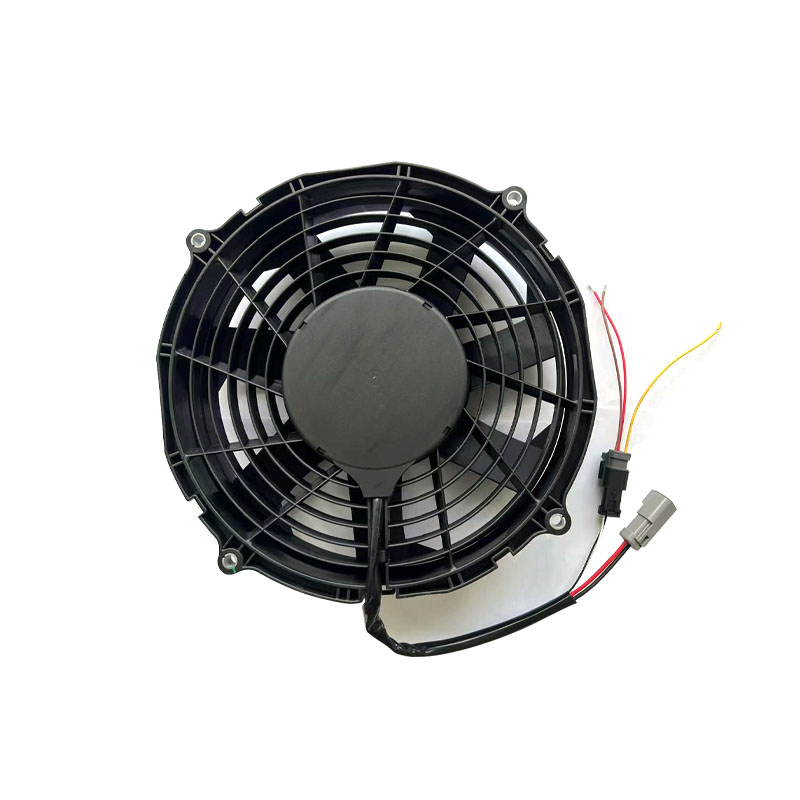
Centrifugal fans are a crucial component in various industrial applications, providing air movement in systems where high air pressure is necessary. Fans can be powered by either alternating current (AC) or direct current (DC), with each type offering unique advantages in terms of power efficiency, cost-effectiveness, and operational characteristics. Among the noteworthy fans in the market today are DC brushless centrifugal fans. These fans, which use direct current power without brushes to control the motor, have garnered attention for their energy-saving potential.
Centrifugal fans are designed to move air at high pressures by converting rotational kinetic energy into airflow. They achieve this by using an impeller or rotor to direct air into a system. These fans are typically classified into different categories based on their power source, namely DC (direct current) fans and AC (alternating current) fans.
The significant difference between DC brushless centrifugal fans and AC fans lies in the type of motor used to power them.
When it comes to power efficiency, DC fans outperform AC fans in several areas:
Another area where DC brushless centrifugal fans excel is in their ability to offer precise speed control. Since the fan speed can be adjusted by simply varying the input voltage, these fans allow for smoother operation and better adaptation to varying airflow needs.
One of the key advantages of DC brushless centrifugal fans is their extended lifespan. The absence of brushes means there is less wear and tear on the motor, reducing the need for frequent maintenance or replacement.
DC brushless centrifugal fans generally produce less noise compared to their AC counterparts. This is due to the smoother operation of the motor and the fact that they tend to run more quietly at lower speeds.
Let’s take a deeper look at how the power efficiency of DC brushless centrifugal fans compares to AC fans in specific application scenarios.
At lower loads, DC fans are far more efficient, consuming significantly less power to achieve the same airflow as an AC fan. This can long-term savings, especially in applications that do not require constant airflow, such as HVAC systems or cooling applications in electronics.
| Fan Type | Power Consumption (at low load) | Power Consumption (at high load) |
|---|---|---|
| DC Brushless Fans | Low | Moderate to high |
| AC Fans | Moderate | High |
While DC brushless centrifugal fans tend to have higher upfront costs due to their more sophisticated design, their lower energy consumption can significant savings over time. These fans are especially useful in applications where energy savings are crucial, such as in residential or commercial HVAC systems.
In contrast, AC fans are generally more affordable initially but can higher electricity costs in the long run due to their less efficient power consumption.
In summary, DC brushless centrifugal fans are far more power-efficient than AC fans, especially when considering their performance in variable speed applications, energy savings, and longevity. While DC fans come with a higher initial investment, their lower energy consumption and maintenance requirements provide a greater return on investment in the long term. AC fans, although still popular in many applications, tend to be less efficient and more prone to wear and tear over time.
1. What are the key advantages of DC brushless centrifugal fans over AC fans?
DC brushless centrifugal fans are more energy-efficient, require less maintenance, and generate less noise compared to AC fans.
2. Are DC brushless centrifugal fans suitable for high-power applications?
Yes, DC fans are suitable for high-power applications, but their efficiency and energy savings become more apparent in low-load and variable-speed scenarios.
3. How do DC fans improve energy savings in HVAC systems?
DC fans use less power to generate the same airflow, especially at lower speeds, making them highly efficient for variable airflow in HVAC systems.
4. What industries benefit the from using DC brushless centrifugal fans?
Industries such as HVAC, electronics cooling, and renewable energy systems benefit significantly from DC brushless fans due to their low power consumption and long lifespan.
5. What maintenance is required for DC brushless centrifugal fans?
DC brushless centrifugal fans generally require less maintenance because they do not have brushes that wear down over time, making them more durable and cost-effective in the long term.
Your email address will not be published. Required fields are marked *

Zhejiang Nicety Electric Machinery Co., Ltd. specializes in the production of four series of products: condenser electronic fan, radiator (water tank) fan, blower, and air conditioner assembly. Professional production American, European, Japanese, Korean And Domestic brand DC automotive axial fans.
Email: [email protected] / [email protected]
Tel: +86-0578-7125439 / +86 181 0658 9231
Address:No. 98, Guangda Street, Jinsha Industrial Zone, Longquan City, Zhejiang Province, China