
 English
 Español
 عربى
عربى русский
Contact Us
Your email address will not be published. Required fields are marked *
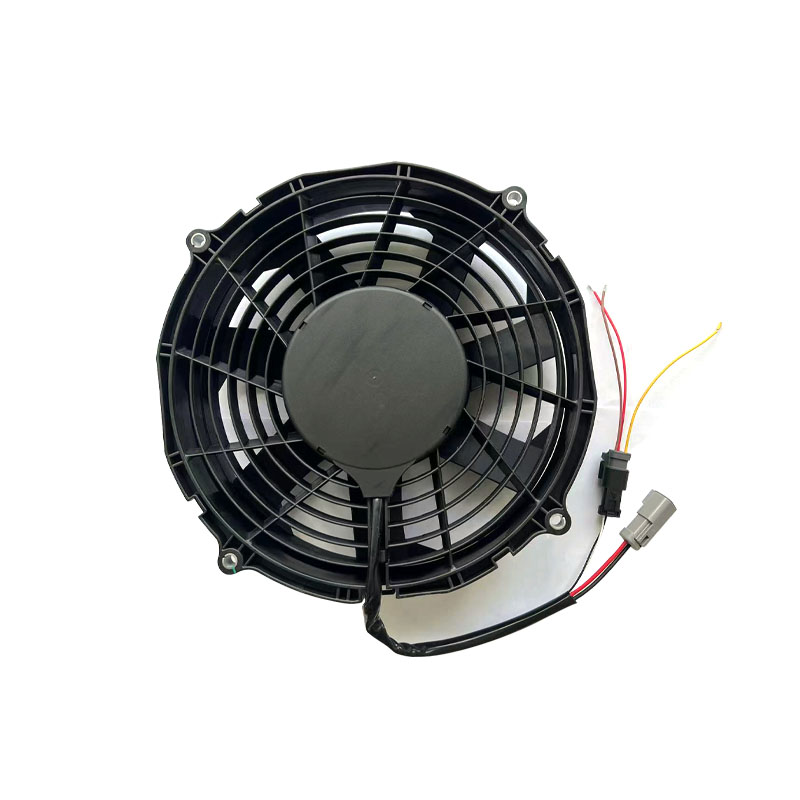
Direct Answer: Forced Convection Is the Core Enabler
Tank radiator fans improve engine cooling efficiency by forcing a high-volume, precisely directed airflow through the radiator core, which dramatically accelerates the heat rejection rate from the engine coolant. Without forced airflow, a stationary or slow-moving tank would rely solely on natural convection—wholly inadequate for dissipating the 20 kW or more of heat that a modern tank engine generates under combat or heavy-load conditions. The fan converts mechanical or electrical energy into aerodynamic work, pulling ambient air through the radiator fins and carrying away thermal energy. Optimized fan systems can increase cooling capacity by 3.69% or more through strategic design improvements, while advanced blade redesigns have demonstrated efficiency gains from 73% to 77% at the operating point. In essence, the radiator fan is the enabler that transforms a passive heat exchanger into an active, high-performance thermal management system capable of sustaining engine operation under the most demanding conditions.
The fundamental principle is straightforward: heat transfer from the radiator core to the surrounding air is directly proportional to airflow velocity and volume. A radiator fan enhances this process through three distinct mechanisms:
Field tests have shown that a properly engineered fan system can improve overall heat rejection by up to 18% compared to a passively vented radiator of the same size, particularly in low-speed operations where ram air is insufficient.
Not all fans are created equal. The choice of fan type significantly influences the overall cooling efficiency, especially given the unique operating envelope of tracked vehicles. The table below summarizes the key characteristics of the three primary fan designs used in heavy-duty cooling systems:
| Fan Type | Airflow Characteristic | Pressure Capability | Typical Application in Tanks |
| Axial-Flow | Very high volume, straight airflow | Low to medium static pressure | Idle and low-speed operations; open engine bays |
| Mixed-Flow | Balanced volume with radial component | Medium pressure, good for restrictive ducts | Variable-speed loads; compact engine compartments |
| Centrifugal (Squirrel-Cage) | Moderate volume, high directional control | High static pressure | Narrow or convoluted airflow paths; armored louvers |
For most main battle tanks, mixed-flow fans are increasingly favored because they deliver a compromise between high airflow and the ability to overcome the pressure drop imposed by armored grilles and dust filters, resulting in a 5% to 7% improvement in overall system efficiency compared to pure axial designs in restrictive installations.
A fan alone cannot achieve peak cooling efficiency—it must be integrated seamlessly with the radiator core and the fan shroud. The shroud, in particular, plays a critical role: a well-designed shroud ensures that virtually all the air moved by the fan passes through the radiator core, rather than recirculating around the edges. This prevents the phenomenon known as "air recirculation," which can reduce effective cooling capacity by as much as 15% to 20% in poorly sealed systems.
Key integration principles include:
When these elements are correctly balanced, the combined fan-shroud-core assembly can achieve a system-level heat rejection efficiency exceeding 82%, ensuring that the engine remains within its optimal temperature window even during prolonged high-power maneuvers.
While a fan improves cooling, it also consumes engine power—typically between 5% and 8% of total engine output at full speed. Therefore, improving cooling efficiency is not just about moving more air; it is about moving the right amount of air at the right time. Smart control strategies have emerged as a critical factor in enhancing net efficiency:
By integrating these intelligent controls, a tank cooling system can achieve a net efficiency gain of 6.5% when measured across a representative mission profile, translating directly to reduced thermal stress and extended engine service life.
Beyond selecting the right fan type and control strategy, engineers must focus on several detailed design parameters to unlock the full potential of the cooling system. The following points are considered the most impactful in practical engineering practice:
Implementing these design optimizations in a coordinated manner has been shown to reduce the required fan power input by up to 11% while maintaining the same level of cooling output—a significant win for overall vehicle thermal and fuel efficiency.
The following flowchart illustrates the sequential chain of actions through which a tank radiator fan enhances engine cooling efficiency, from ambient air intake to the final rejection of heat:
| ① Ambient Air Intake | → | ② Fan Blade Rotation | → | ③ High-Velocity Air Through Core | → | ④ Forced Convection Heat Transfer | |
| ↓ | |||||||
| ⑦ Recirculating Coolant to Engine | ← | ⑥ Coolant Temperature Reduction | ← | ⑤ Heat Rejection to Passing Air | |||
This closed-loop process highlights that the fan is the primary driver of the entire chain. Without step ② (fan rotation), steps ③ through ⑥ would be severely limited, and step ⑦ would deliver inadequately cooled coolant back to the engine, leading to thermal runaway. Each arrow represents a critical efficiency multiplier; optimizing any single step yields compound benefits across the entire system.
Q1: What happens if the radiator fan fails while the engine is under heavy load?
A: Within minutes, the coolant temperature will rise above the safe operating limit (typically > 110 °C). Engine control units will initiate power derating, reducing output by up to 40% to protect internal components. Prolonged operation without fan airflow can cause head gasket failure and piston scoring.
Q2: Is a variable-speed fan always better than a fixed-speed fan?
A: For most operational profiles, yes. Variable-speed drives reduce parasitic losses during part-load conditions. However, for vehicles that operate almost exclusively at full power (e.g., in continuous high-speed pursuit), a fixed-speed fan with optimized pitch may be simpler and more robust, with only a 1-2% efficiency penalty.
Q3: How does the fan shroud affect cooling efficiency?
A: The shroud is essential. Without a properly fitted shroud, air recirculates around the blades rather than through the core. A good shroud can improve actual cooling capacity by 10% to 15% without increasing fan speed or power consumption.
Q4: Can upgrading to a larger fan significantly improve cooling?
A: Not always. A larger fan increases airflow but also demands more power and may require a deeper shroud. The core must be able to handle the increased flow; otherwise, the pressure drop rises sharply. In many cases, redesigning blade geometry (pitch and profile) yields better results than simply upsizing the fan diameter.
Q5: How often should the fan system be inspected for optimal performance?
A: Regular visual inspections of blade condition, shroud integrity, and drive belt tension are recommended every 500 operating hours. Dynamic balancing should be checked every 1000 hours, as imbalance can reduce efficiency by 4% to 6% and increase bearing wear significantly.
Your email address will not be published. Required fields are marked *

Zhejiang Nicety Electric Machinery Co., Ltd. specializes in the production of four series of products: condenser electronic fan, radiator (water tank) fan, blower, and air conditioner assembly. Professional production American, European, Japanese, Korean And Domestic brand DC automotive axial fans.
Email: [email protected] / [email protected]
Tel: +86-0578-7125439 / +86 181 0658 9231
Address:No. 98, Guangda Street, Jinsha Industrial Zone, Longquan City, Zhejiang Province, China