
 English
 Español
 عربى
عربى русский
Contact Us
Your email address will not be published. Required fields are marked *
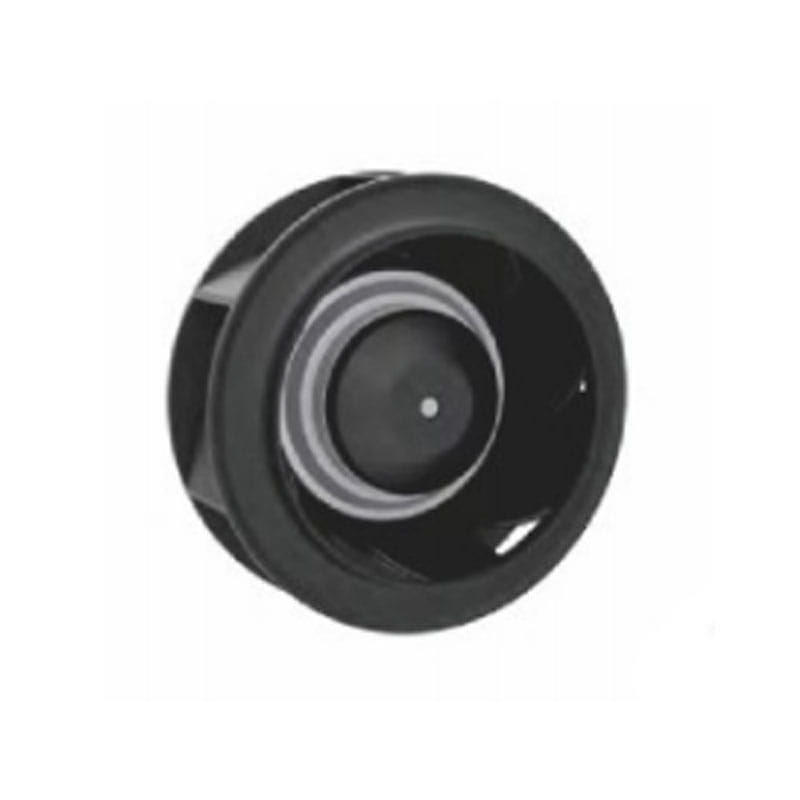
For OEM thermal management architectures, EC backward tilting centrifugal fans deliver a measurable total cost of ownership (TCO) advantage by merging the inherent efficiency of brushless EC motors with the aerodynamic superiority of backward-curved impellers. This combination yields energy savings of 30–45% compared to conventional AC fan solutions in comparable duty cycles, while providing superior airflow stability and maintenance intervals exceeding 40,000 hours of continuous operation.
The efficiency gains of EC backward tilting centrifugal fans arise from a synergy of motor technology and fluid dynamics. These gains are transformational — not incremental — for thermal system design.
Unlike AC induction motors that lose efficiency at partial loads, EC motors maintain over 85% efficiency across a wide operating range, whereas AC motors can drop to 50–60% efficiency when throttled. The integrated electronic commutation enables precise speed control without harmonic losses associated with external variable frequency drives.
The backward‑tilted blade geometry provides a flat, stable pressure characteristic with a non‑overloading power curve. As system resistance (static pressure) increases — for instance, when filters become clogged — fan power consumption does not spike dramatically. This inherent characteristic protects the motor from overload and ensures consistent airflow, which is critical for sensitive electronic cooling applications.
The true power of EC backward tilting fans lies in leveraging the affinity laws, which state that fan power varies with the cube of speed. A modest speed reduction yields exponential energy savings.
The following table contrasts the technical and performance characteristics that directly impact thermal management system design and operational costs.
| Feature | EC Backward Tilting Fan | Traditional AC Fan |
|---|---|---|
| Energy Efficiency | High (85%+ across load range) | Moderate to Low (50–60% at partial load) |
| Power Curve | Non‑overloading, flat characteristic | Overload risk at low flow / high static pressure |
| Airflow Control | Built‑in stepless speed modulation (0‑10 V / PWM) | Requires external VFD or damper control |
| Maintenance & Lifespan | Low (brushless motor, >40,000 hrs) | High (brushed or induction motors, more wear) |
| Noise Profile | Lower (smooth airflow, reduced turbulence) | Higher (vibration, aerodynamic noise) |
EC backward tilting centrifugal fans are not passive components; they are intelligent subsystems that enhance overall thermal system reliability through embedded protective features. These features are critical for OEM applications where system uptime is paramount.
① Thermal load sensing → ② EC controller adjusts speed (0‑10 V/PWM) → ③ Backward tilting impeller delivers stable airflow → ④ Non‑overloading power curve protects motor → ⑤ Intelligent protection (locked‑rotor, overtemp) → ⑥ Continuous monitoring via FG/RS485
closed‑loop control ensures precise thermal regulation with minimal energy waste.
This closed‑loop sequence ensures that the fan operates at the optimal point on its performance curve, delivering required cooling with minimum power consumption and maximum reliability — a direct benefit of the EC backward tilting architecture.
When integrating EC backward tilting centrifugal fans into new or existing thermal systems, several practical factors enhance overall system performance:
Your email address will not be published. Required fields are marked *

Zhejiang Nicety Electric Machinery Co., Ltd. specializes in the production of four series of products: condenser electronic fan, radiator (water tank) fan, blower, and air conditioner assembly. Professional production American, European, Japanese, Korean And Domestic brand DC automotive axial fans.
Email: [email protected] / [email protected]
Tel: +86-0578-7125439 / +86 181 0658 9231
Address:No. 98, Guangda Street, Jinsha Industrial Zone, Longquan City, Zhejiang Province, China