
 English
 Español
 عربى
عربى русский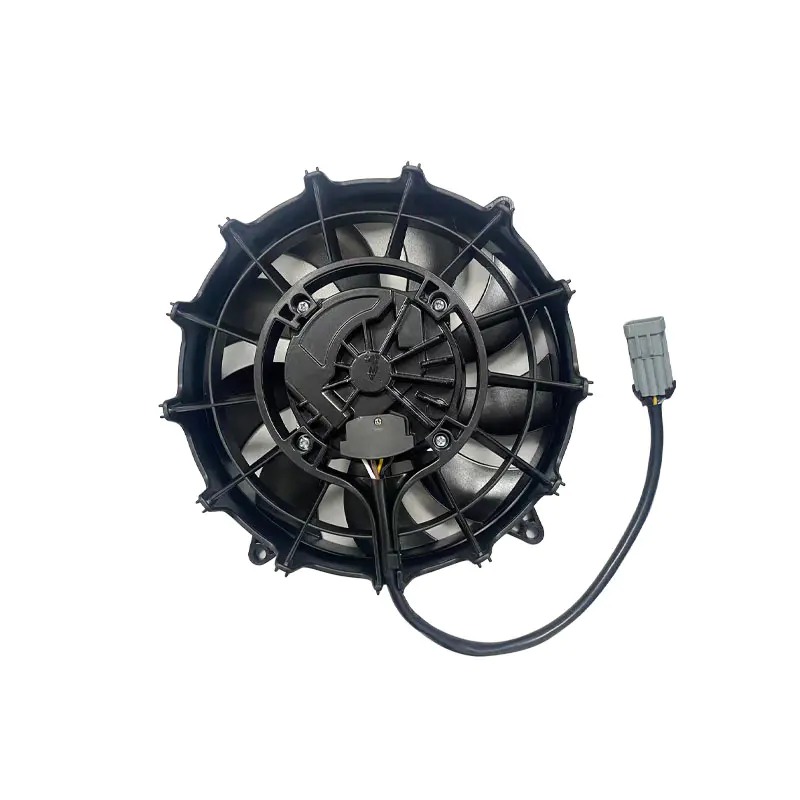
Direct Impact: How DC Axial Fans Cut Fuel Use
Yes, DC automotive axial fans directly reduce fuel consumption. Their primary contribution is through intelligent thermal management that minimizes parasitic energy losses and optimizes engine operating temperatures. By employing advanced brushless DC motors and smart control algorithms, these fans can reduce power draw by up to 30% compared to traditional fixed-speed fans, directly lowering alternator load and engine fuel consumption. Additionally, strategic fan operation during cold starts can accelerate engine warm-up by up to 50%, reducing the duration of inefficient, fuel-rich combustion.
Brushless Motor Efficiency: The Core Driver
The transition from traditional brushed motors to electronically commutated brushless DC motors is the most critical factor for fuel savings. These motors eliminate mechanical friction and electrical sparking, converting more electrical energy into airflow rather than waste heat. This efficiency allows a BLDC fan to deliver the required cooling while consuming 20-30% less power than a brushed equivalent. For heavy-duty vehicles, this can translate to a measurable reduction in alternator load, which directly reduces engine fuel consumption by up to 1.5% in urban driving cycles.
Durability and Lifecycle Fuel Savings
While not a direct daily saving, the extended lifespan of BLDC fans contributes to overall fuel economy. High-quality brushless fans can operate for up to 40,000 hours, compared to 3,000-5,000 hours for brushed fans. This longevity reduces the frequency of replacements, saving the energy and materials required for manufacturing new parts. Over a vehicle's lifetime, this translates to lower embodied energy and reduced maintenance downtime, indirectly supporting fuel efficiency.
Smart Control: The Brain Behind the Savings
Raw motor efficiency is only part of the equation. The true potential for fuel reduction comes from demand-based, intelligent fan control systems.
Variable Speed Operation
Traditional fans are often either on or off. Smart DC axial fans use sensors (temperature, pressure, vehicle speed) and pulse-width modulation to precisely adjust their speed. Running a fan at half speed can reduce power consumption by nearly 87.5% compared to full speed. By modulating speed in real time, the system avoids the energy waste of running at full power when not needed, achieving typical power savings of 20-30% in real-world driving.
Cold Start Optimization
A surprisingly impactful strategy is using the fan to shorten the cold start phase. A cold engine runs a rich fuel mixture, which is inefficient and increases emissions. Some advanced systems can briefly operate the fan in reverse, blocking cold ram air from hitting the radiator and engine. This allows the engine to reach its optimal operating temperature (around 94-98°C) significantly faster, reducing the duration of fuel-inefficient operation and lowering fuel consumption during the first few minutes of driving.
Fuel Saving Mechanisms at a Glance
Integrated Thermal Management: A System-Level View
The fuel-saving contribution of DC axial fans is maximized when they are integrated into a holistic thermal management system. This system coordinates the fan, radiator, coolant pump, and grille shutters to balance cooling needs with aerodynamic drag and powertrain efficiency. Modern systems can reduce total cooling-related parasitic losses by up to 40%, directly improving overall vehicle fuel economy. This is particularly significant for OEMs aiming to meet stringent CO2 emission standards without compromising performance.
Frequently Asked Questions
Are DC axial fans effective for both gasoline and diesel engines?
Yes, the fuel-saving benefits apply to both. However, the impact is often more pronounced in diesel engines, which operate at higher thermal loads and benefit more from precise temperature control. The efficiency gains in electrical power consumption translate to fuel savings regardless of the powertrain.
Can retrofitting a DC fan reduce fuel consumption?
Yes, retrofitting a vehicle with a smart DC axial fan can yield immediate fuel savings. The payback period depends on the vehicle's duty cycle, but for long-haul trucks, the fuel savings often cover the retrofit cost within 12 to 18 months.
Do these fans require special controllers?
Most advanced DC fans include integrated electronic controllers. For OEM integration, they communicate via CAN bus with the vehicle's engine control unit for coordinated operation.
Conclusion: The Measurable Advantage
DC automotive axial fans are not just components; they are active fuel-saving devices. Through brushless motor efficiency, intelligent variable speed control, and cold-start strategies, they provide tangible fuel savings of 1.5% to 3% in real-world driving. For a fleet of heavy-duty vehicles, this translates to thousands of liters of fuel saved annually, directly impacting operating costs and environmental footprint. As thermal management systems become smarter, the role of these fans in reducing fuel consumption will continue to grow.