
 English
 Español
 عربى
عربى русский
Contact Us
Your email address will not be published. Required fields are marked *
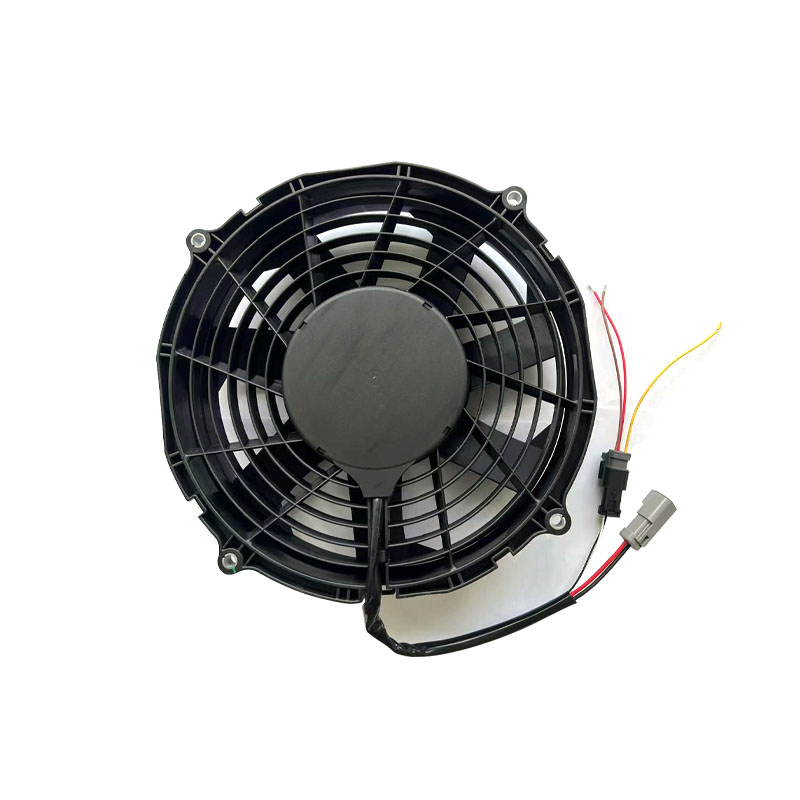
In recent years, DC brushless axial flow fans have become increasingly popular in various industrial applications due to their efficiency, reliability, and long lifespan. These fans, driven by advanced DC brushless motors, are integral to systems that require consistent airflow with minimal maintenance.
A DC brushless axial flow fan is a type of cooling fan that uses a brushless DC motor (BLDC) to power the blades of the fan. Unlike traditional fans that use brushes to transfer electricity to the motor, brushless fans eliminate the need for brushes, reducing friction and wear. This makes them more durable, efficient, and quieter compared to brushed motors. The term “axial flow” refers to the direction in which air is moved through the fan—along the axis of rotation of the fan blades.
The working principle of DC brushless axial flow fans revolves around the interaction between the motor’s electromagnetic fields and the rotor’s permanent magnets. Here’s a breakdown of the key components and how they work:
Brushless DC Motor: The fan’s motor utilizes a permanent magnet rotor and a stator with electromagnets. The rotor is driven by the changing magnetic fields produced by the stator, eliminating the need for brushes to provide current.
Fan Blades: The fan blades are designed to generate a high airflow when rotated. The axial flow design ensures that the air moves parallel to the axis of the fan, providing effective cooling over large areas.
Controller: A fan controller is used to regulate the fan’s speed and optimize its operation. This allows for energy savings and adjustable airflow, making the fan adaptable to different operational needs.
| Component | Description | Role in Fan Functionality |
|---|---|---|
| Brushless DC Motor | Motor with a permanent magnet rotor and electromagnetic stator. | Powers the fan blades with minimal friction and maintenance. |
| Fan Blades | Typically made from durable materials like plastic or metal. | Generate airflow in the axial direction. |
| Controller | Regulates speed and controls airflow. | Ensures efficient operation and energy savings. |
| Bearing System | Can be ball bearings or fluid dynamic bearings for smooth operation. | Reduces wear and noise, increasing fan lifespan. |
| Power Supply | Provides DC voltage to the fan motor. | Powers the entire fan system, usually low voltage. |
Efficiency: DC brushless axial flow fans are highly efficient, converting of the electrical energy into mechanical energy. This results in lower power consumption and more effective cooling, making them ideal for energy-conscious applications.
Longevity: Without the use of brushes, there is minimal wear and tear, which results in a longer lifespan. This also reduces the need for regular maintenance, making these fans a reliable choice for many industrial applications.
Quieter Operation: The absence of brushes eliminates friction, resulting in quieter operation. This is particularly important in environments where noise reduction is essential.
Compact and Lightweight: These fans are typically more compact and lightweight than traditional fans, which makes them suitable for use in confined spaces or where weight is a concern.
Precise Speed Control: DC brushless motors allow for precise control over fan speed, which can be adjusted to match the cooling needs of the system. This adaptability enhances overall system performance.
DC brushless axial flow fans are used in a wide range of industries, including electronics, automotive, HVAC systems, and renewable energy. Here are some of the primary applications:
The unique design of DC brushless axial flow fans makes them highly suitable for industrial use. They offer robust performance in harsh environments, low maintenance needs, and energy savings, making them an ideal solution for cooling systems in industrial plants, data centers, and other demanding applications.
While DC brushless axial flow fans have many advantages, it’s important to compare them with other types of fans to understand their specific benefits:
| Feature | DC Brushless Axial Flow Fans | Brushed Axial Flow Fans | Centrifugal Fans |
|---|---|---|---|
| Efficiency | Very high | Moderate | Moderate to high |
| Maintenance | Low | High (due to brush wear) | Low |
| Noise Level | Low | Moderate to high | Moderate to high |
| Lifespan | Long | Shorter | Long (if well-maintained) |
| Application | Precision cooling, small spaces | Basic industrial applications | High airflow, heavy-duty cooling |
DC brushless axial flow fans are a technologically advanced solution for modern cooling requirements, offering efficiency, longevity, and adaptability for a variety of applications. With their brushless DC motor, low maintenance requirements, and quiet operation, these fans are poised to play a crucial role in the future of industrial cooling solutions.
1. What is the main advantage of a DC brushless axial flow fan over a traditional brushed fan?
The main advantage is that DC brushless fans have no brushes, which reduces friction, resulting in lower maintenance needs, longer lifespan, and quieter operation.
2. How does a DC brushless motor contribute to the efficiency of axial flow fans?
A DC brushless motor eliminates energy losses caused by friction and wear from brushes, allowing the fan to operate more efficiently and with less heat generation.
3. Are DC brushless axial flow fans suitable for high-heat environments?
Yes, these fans are highly effective in high-heat environments as they provide consistent airflow while being energy-efficient, which helps in cooling critical components.
4. Can DC brushless axial flow fans be used in commercial HVAC systems?
Yes, DC brushless axial flow fans are often used in commercial HVAC systems due to their efficiency, low maintenance, and ability to maintain consistent airflow.
5. What industries benefit the from using DC brushless axial flow fans?
Industries such as electronics, automotive, HVAC, and renewable energy benefit greatly from using DC brushless axial flow fans due to their reliability and efficiency in demanding applications.
Your email address will not be published. Required fields are marked *

Zhejiang Nicety Electric Machinery Co., Ltd. specializes in the production of four series of products: condenser electronic fan, radiator (water tank) fan, blower, and air conditioner assembly. Professional production American, European, Japanese, Korean And Domestic brand DC automotive axial fans.
Email: [email protected] / [email protected]
Tel: +86-0578-7125439 / +86 181 0658 9231
Address:No. 98, Guangda Street, Jinsha Industrial Zone, Longquan City, Zhejiang Province, China