
 English
 Español
 عربى
عربى русский
Contact Us
Your email address will not be published. Required fields are marked *
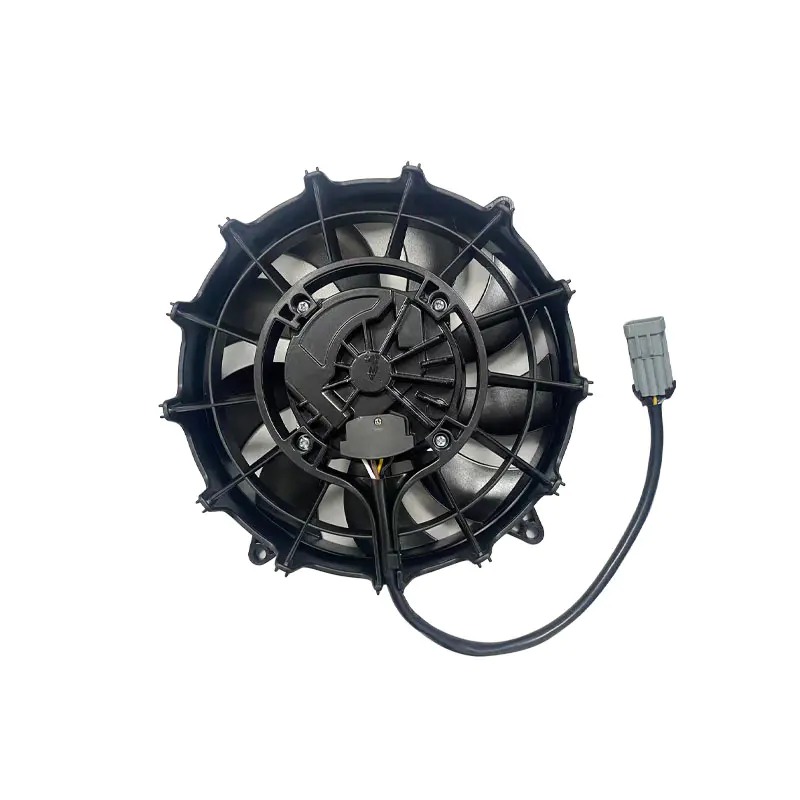
A brushless fan EC fan combines two complementary technologies to deliver high-performance air circulation with minimal mechanical wear. A brushless motor operates without the traditional carbon brushes found in conventional DC motors, instead using electronic commutation to control rotor movement. An EC fan, or electronically commutated fan, integrates precise electronic control systems that regulate motor speed and airflow in real-time. Many modern EC fans incorporate brushless motor architecture, making the combination of brushless technology and electronic commutation the industry standard for energy-efficient ventilation solutions.
The distinction between these two terms is important. Brushless describes the motor's physical structure and commutation method, while EC refers to the electronic control strategy that drives the motor. When combined, a brushless EC fan delivers superior efficiency, reduced maintenance requirements, and fine-grained control over operating parameters—making it the preferred choice for applications ranging from commercial HVAC systems to data center cooling infrastructure.
A brushless motor eliminates mechanical brush-to-commutator contact that characterizes traditional DC motors. Instead, it uses a fixed stator with permanent magnets and an electronically controlled rotor. This architecture provides several structural advantages. The motor contains three primary components: the stator (stationary coils that create magnetic fields), the rotor (permanent magnets mounted on a rotating shaft), and an electronic controller that manages current flow to the stator coils.
Unlike brush-based motors where physical brushes wear down over time and require replacement, brushless motors have no consumable components in direct contact with moving parts. This design eliminates brush dust accumulation, arcing, and the electrical noise associated with brush commutation. The result is a cleaner, more reliable motor that maintains consistent performance throughout its operational life.
Electronic commutation is the process of switching current direction through the stator coils at precisely the right moments to maintain continuous rotor rotation. A position sensor or sensorless algorithm detects rotor position and signals the electronic controller to switch current flow. This switching occurs rapidly—typically thousands of times per second—creating a rotating magnetic field that drives the rotor forward smoothly and efficiently.
The controller manages commutation timing based on real-time motor conditions, optimizing performance across different load situations. This closed-loop control allows the motor to adapt automatically to changing airflow resistance, maintaining consistent output regardless of external conditions. The precision of electronic commutation eliminates the irregular torque delivery characteristic of brush-based motors, resulting in smoother operation and lower vibration.
EC is the abbreviation for Electronically Commutated. An EC fan is a ventilation device controlled by dedicated electronic circuitry that manages motor speed, power consumption, and airflow output. Unlike traditional AC fans that operate at fixed speeds determined by line frequency, or basic DC fans with limited control options, EC fans offer variable-speed operation through sophisticated electronic control.
The EC controller continuously monitors motor performance and adjusts electrical parameters in response to system demands. When ventilation requirements decrease, the controller reduces motor speed proportionally, lowering power consumption and noise output. Conversely, when higher airflow is needed, the controller increases speed and power delivery automatically. This dynamic adjustment capability makes EC fans exceptionally efficient in applications with variable loads.
EC fan systems operate using DC (direct current) power supplied through an electronic control module. The control module receives signals from speed controllers, sensors, or building management systems, then adjusts voltage and frequency supplied to the motor accordingly. EC fans typically operate across a wide speed range—commonly from 10 percent to 100 percent of maximum capacity—without mechanical speed reduction mechanisms.
The electronic control also enables soft-start functionality, which gradually ramps motor speed on startup rather than applying full power instantaneously. This reduces mechanical shock on bearings and the fan structure, extending component life. Additionally, EC fans generate precise performance data during operation, allowing system monitors to track efficiency, detect maintenance needs, and optimize overall ventilation performance.
Modern EC fans almost universally employ brushless motor technology. However, these are distinct concepts that address different aspects of motor operation. Brushless technology focuses on the physical motor construction and commutation method, eliminating mechanical brushes. EC technology addresses how the motor is controlled and regulated electronically. A fan can theoretically be brushless but not EC-controlled if it operates at fixed speed without variable-speed capability. Conversely, some legacy AC-based systems might have electronic controllers without being either brushless or truly electronically commutated in the modern sense.
The convergence of brushless motors and EC control creates a synergistic technology platform. The brushless motor's inherent durability and efficiency are amplified by the precise control capabilities of EC systems, resulting in fans that deliver exceptional performance across their entire operational range.
Understanding the operational sequence of a brushless EC fan provides insight into why this technology has become standard in modern ventilation systems. The process involves several coordinated steps, from initial power supply through final airflow generation.
The process begins when electrical power is supplied to the EC controller. In most systems, this is DC power (typically 24V, 48V, or 230V depending on application). The controller receives this raw power and performs initial voltage regulation, ensuring stable, clean power delivery to downstream components. The power supply circuit includes filtering and protection mechanisms that prevent voltage fluctuations from affecting motor performance.
Simultaneously, the EC controller receives operational signals from external sources. These signals originate from various inputs: a potentiometer dial (for manual speed adjustment), a 0-10V analog voltage signal from a building automation system, a PWM (pulse-width modulation) signal, or a digital communication protocol. The controller interprets these signals and determines the desired motor speed and operating parameters.
Based on the processed control signal, the EC controller commutates the motor by sequentially switching current through different stator coil combinations. The controller monitors the motor's magnetic position through either Hall-effect sensors mounted within the motor or through back-EMF (electromotive force) sensing algorithms that detect rotor position without physical sensors. As the rotor position changes, the controller switches current flow to maintain continuous rotation.
The voltage and timing of these commutation pulses determine motor speed. The controller adjusts switching frequency and duty cycle in response to the desired speed command, enabling seamless variable-speed operation. If external load increases (such as increased duct resistance), the controller automatically increases current delivery to maintain the commanded speed.
The continuous commutation creates a rotating magnetic field that drives the rotor—and attached motor shaft—in continuous rotation. The motor shaft is connected directly to the fan impeller (the blade assembly), which begins rotating at the speed determined by the commutation frequency. Modern brushless EC fan motors are designed for direct-drive application, eliminating the need for belts, pulleys, or gearboxes that would introduce mechanical losses.
As the impeller rotates, its blades push air molecules, generating airflow. The magnitude of airflow increases proportionally with rotational speed. An EC fan operating at 50 percent speed generates approximately 50 percent of its maximum airflow (assuming constant static pressure load). This linear relationship between speed and output makes EC fans highly predictable for system design and optimization.
Throughout operation, the EC controller continuously monitors motor parameters including voltage, current, temperature, and speed. Modern controllers incorporate thermal protection that automatically reduces speed if motor temperature exceeds safe limits. Some advanced controllers communicate status information back to building management systems, providing real-time diagnostics and enabling predictive maintenance planning.
Brushless EC fans typically consume 30 to 50 percent less electrical power than traditional AC-induction motors operating at comparable airflow. This efficiency advantage originates from several sources: the elimination of brush friction losses, the absence of slip inherent in AC motors, the precise commutation enabled by electronic control, and the ability to operate at reduced speed when maximum output isn't needed.
When an application requires only 50 percent airflow for extended periods, an EC fan consumes approximately 12.5 percent of the power that would be required by a fixed-speed AC motor—because power consumption decreases with the cube of speed reduction. A system running an EC fan at reduced speed 80 percent of the operating day can achieve dramatic total energy savings, directly translating to reduced operating costs and smaller carbon footprint.
EC fans respond dynamically to changing system requirements. When ventilation demand decreases, the electronic controller automatically reduces motor speed, proportionally reducing both airflow and power consumption. This capability proves invaluable in applications with variable loads—such as office buildings with occupancy that fluctuates throughout the day, data centers with computing load variations, or industrial facilities with intermittent processes.
The controller can implement sophisticated speed profiles programmed for specific applications. In HVAC systems, the controller might increase speed during peak occupancy hours, maintain mid-range speed during light use periods, and operate at minimal speed during unoccupied hours. This load-responsive approach ensures comfort while minimizing unnecessary power consumption.
The brushless design eliminates several wear mechanisms present in traditional motors. Without mechanical brushes making continuous contact with the rotating commutator, there is no brush wear, no dust generation, and no brush replacement required. Bearings in brushless motors experience lower heat generation than brush-based motors, reducing thermal stress and extending bearing life.
Additionally, the smooth commutation provided by electronic control reduces vibration and mechanical shock to bearings and mounts. Studies show that brushless EC fans frequently operate 50,000 to 100,000 hours before requiring bearing replacement—approximately two to four times longer than comparable AC-induction motors. This extended life reduces total cost of ownership despite potentially higher initial purchase price.
Electronic control enables precise regulation of motor speed with granularity typically better than one percent. System designers can program specific speed schedules, create sophisticated temperature or pressure-based control logic, and integrate multiple fans into coordinated systems. In applications requiring consistent airflow despite changing duct resistance or filter clogging, closed-loop control systems can monitor actual performance and adjust motor speed automatically to maintain setpoint.
Smooth electronic commutation eliminates the electromagnetic noise characteristic of brush-based motors. The absence of brush arcing, the reduction of vibration, and the ability to operate at reduced speed during low-demand periods all contribute to quieter operation. EC fans typically produce 3 to 8 dB less noise than comparable AC motors at full speed, and the noise reduction becomes even more significant when operating at part speed.
EC controllers implement soft-start functions that gradually ramp motor speed from zero to the commanded setpoint over a programmable time interval—typically 0.5 to 5 seconds. This gradual acceleration reduces mechanical shock to bearings, motor windings, and drive shafts. Systems with soft-start functionality experience significantly reduced stress during startup events that occur multiple times daily in real-world applications.
Modern EC controllers include built-in diagnostic capabilities that monitor motor performance throughout operation. The controller can detect conditions such as impeller blockage (indicated by excessive current draw at constant speed), bearing degradation (indicated by vibration changes), or thermal issues. Some controllers communicate diagnostic information to external systems, enabling facility managers to schedule maintenance proactively before failures occur.
Understanding how these three motor technologies compare helps clarify why EC fans have become the preferred choice for modern ventilation applications.
| Characteristic | EC Fan | Traditional AC Fan | Brushless DC Fan |
|---|---|---|---|
| Motor Type | Brushless with electronic commutation | AC induction motor | Brushless DC motor |
| Commutation Method | Electronic switching | AC synchronous | Electronic switching |
| Speed Control | Infinitely variable, 10-100 percent | Fixed speed or requires external controller | Variable with external controller |
| Energy Efficiency | 90-95 percent typical | 70-85 percent typical | 85-92 percent typical |
| Soft-Start | Integrated in controller | Requires separate equipment | Integrated in controller |
| Maintenance Needs | Minimal, no brush replacement | Moderate, brush wear eventually | Minimal, no brush replacement |
| Operating Cost (annual) | Lowest due to efficiency and reduced speed operation | Highest due to fixed-speed operation | Low to moderate depending on control system |
| Initial Cost | Moderate to higher | Lower | Moderate |
| Typical Lifespan | 50,000-100,000 hours | 30,000-50,000 hours | 40,000-80,000 hours |
| Acoustic Noise | Very low, especially at part speed | Moderate to higher | Low to moderate |
| Thermal Output | Low | Moderate to higher | Low to moderate |
| Integration Capability | Excellent with building automation systems | Limited, requires additional controllers | Good, requires separate controllers |
Traditional AC fans remain appropriate for applications with genuinely fixed ventilation requirements operating extended hours at constant load—such as continuous industrial exhaust systems where initial cost is paramount and energy savings are minimal. However, such applications represent a shrinking proportion of modern installations.
Brushless DC fans without full EC control offer a middle-ground option for applications requiring variable speed but not sophisticated electronic integration. They provide efficiency and reliability benefits at lower cost than full EC systems, suitable for consumer appliances and simpler commercial applications.
EC fans deliver optimal value in applications with variable loads, extended operating hours, integration requirements, or noise sensitivity. The higher initial cost is typically recovered through energy savings within 2 to 4 years of operation, after which the lower operating cost and reduced maintenance provide pure savings.
Brushless EC motor technology is applied across several fan configurations, each optimized for specific applications and performance characteristics.
Axial fans draw air parallel to the motor shaft and expel it in the same direction—similar to how a household propeller fan operates. Air flows straight through the fan with minimal turbulence. EC axial fans excel in applications requiring high airflow at low to moderate static pressure, such as general ventilation, equipment cooling, and fresh-air intake systems.
Advantages of axial design include simple construction, low cost, and minimal pressure drop. The motor is typically mounted centrally within the fan housing, surrounded by blade assemblies. EC axial fans are available in sizes from 200mm to 630mm diameter, with single or multiple impellers for increased performance. Common applications include ceiling fans, duct ventilation, and cooler exhaust systems.
Centrifugal fans draw air at right angles to the motor shaft, then redirect it 90 degrees as discharge. The rotating impeller throws air outward against a curved housing, creating higher static pressure capability than axial fans. EC centrifugal fans handle constrained airflow paths, high-resistance ductwork, and applications requiring quiet operation.
The brushless EC motor in centrifugal fans typically drives a belt-driven pulley system or direct-coupled impeller, depending on design and performance requirements. Centrifugal configuration makes these fans ideal for HVAC air handlers, commercial kitchen hoods, industrial fume extraction, and filtration systems. When noise levels must be minimized, centrifugal design combined with EC technology provides excellent acoustic performance.
Blower fans represent a specialized category of high-pressure, typically smaller-frame fans used for targeted air delivery. EC blower motors drive compact impellers optimized for producing high velocity in a defined stream rather than moving large volumes of air. Applications include personal cooling devices, automotive thermal management, data center spot cooling, and industrial process applications.
Blower fans with EC motors offer precise speed control suitable for maintaining exact airflow in critical applications. The compact size and high efficiency make EC blower fans energy-efficient choices for consumer electronics and industrial equipment requiring continuous cooling.
The efficiency, reliability, and controllability of brushless EC fans have made them the technology of choice across diverse industries and applications.
HVAC (heating, ventilation, and air conditioning) systems represent the largest application segment for EC fans. In rooftop units, air handlers, and ventilation equipment, EC fan motors provide variable-speed capability that matches airflow to building occupancy and indoor conditions. A commercial office building can reduce ventilation during unoccupied nighttime hours, then ramp up airflow during working hours, optimizing comfort and minimizing energy waste.
EC fans in HVAC systems can be integrated with building automation systems, receiving commands from occupancy sensors, temperature measurements, or CO2 sensors. When CO2 levels remain low (indicating adequate ventilation and low occupancy), the system reduces fan speed. When CO2 rises (indicating increasing occupancy), the system automatically increases speed. This sensor-driven control delivers optimal indoor air quality while minimizing unnecessary ventilation energy.
Data centers consume enormous quantities of electricity for computing equipment and the cooling systems required to remove that heat. Every percentage point of cooling efficiency improvement translates to significant operating cost reduction across thousands of servers and switches. EC fan motors in data center applications provide exceptional efficiency and speed control, allowing cooling systems to operate at variable load matched to actual thermal demands.
During periods of low computing load, EC fans reduce speed, decreasing cooling energy consumption and acoustic noise. During high-performance computing periods, fans ramp to full speed, providing necessary thermal management. The integrated diagnostics of EC systems enable proactive monitoring of cooling system health, detecting bearing degradation or filter clogging before they become critical issues.
Manufacturing facilities, cleanrooms, and industrial operations require consistent air movement for worker comfort, process support, or environmental control. EC fan systems enable precise airflow maintenance despite varying duct resistance as filters load with dust and particulates. If a filter begins clogging (increasing static pressure), the EC controller automatically increases fan speed to maintain specified airflow, ensuring process consistency without requiring manual intervention.
Industrial facilities operating large ventilation systems often justify EC motor conversion based on energy savings alone, with additional benefits from reduced maintenance and improved process control serving as secondary advantages.
Commercial and industrial air handling units (AHUs) typically contain dedicated EC fan motors for supply and return air functions. The variable-speed capability allows a single fan to serve buildings with diverse operating schedules and load profiles. Retail spaces requiring high ventilation during business hours can operate at minimal ventilation during overnight security-system operation, dramatically reducing daily energy consumption.
EC fan motors in refrigeration equipment provide temperature control through variable airflow regulation. As refrigerated space temperature approaches the setpoint, the controller reduces fan speed, decreasing unnecessary heat dissipation and allowing the refrigeration compressor to cycle less frequently. This cycling reduction extends compressor life and reduces energy consumption.
Servers, telecommunications equipment, and high-power electrical systems generate heat that must be dissipated to prevent damage. EC fan motors enable temperature-sensitive speed control—increasing fan speed only when equipment temperature rises above comfortable levels. This prevents unnecessary cooling during ambient temperature conditions where little heat dissipation is needed while ensuring adequate cooling during peak performance periods.
Heat recovery ventilation (HRV) systems extract thermal energy from exhaust air and use it to precondition incoming fresh air, reducing HVAC energy requirements. These systems typically employ dual EC fan motors for separated supply and exhaust airstreams. Variable-speed control allows the system to balance these airstreams automatically, optimizing heat recovery efficiency.
Selecting an appropriate EC fan requires careful evaluation of application requirements across multiple performance and operational parameters.
Airflow capacity is the primary performance specification. Measure or calculate the required airflow for your application, expressed in cubic feet per minute (CFM) or cubic meters per hour (m3/h). This requirement depends on application type: ventilation standards specify airflow per occupant or per square meter of space; cooling applications require airflow sufficient to remove anticipated heat load; process applications have specific process-defined requirements.
Select an EC fan capable of delivering the required airflow at rated voltage. Most manufacturers provide performance curves showing airflow across the speed range—verify that the fan can deliver required flow at speeds below maximum, ensuring you can operate at part speed for energy efficiency during partial-load conditions.
Static pressure represents resistance to airflow created by ductwork, filters, and system components. Fans must overcome this resistance to deliver design airflow. If actual system resistance exceeds the fan's static pressure rating, the fan cannot deliver specified airflow. Undersizing static pressure capability results in system underperformance; oversizing increases energy consumption unnecessarily.
Measure or calculate total system static pressure by summing resistance contributions: clean filter (typically 0.05 to 0.15 inches water column), dirty filter (increase to 0.2 to 0.5 inches depending on filter type and loading), ductwork (0.05 to 0.2 inches per 100 feet depending on duct size and shape), and any other components. Select a fan with static pressure rating at least 20 percent higher than calculated system resistance to ensure reliable performance as filters load.
Fans are available in standardized sizes from 200mm (approximately 8 inches) to 630mm (approximately 25 inches) diameter for axial fans, with centrifugal fans in additional sizes. Physical space constraints may limit fan diameter options. Verify that selected fan fits within available mounting space, accounting for motor housing, connection points, and any guard or cover required by applicable safety standards.
Motor power ratings typically range from less than 1 watt for small personal cooling fans to several kilowatts for large industrial systems. Power consumption at rated speed determines electrical supply requirements. Standard voltages include 12V or 24V for small systems, 48V for some medium systems, 100-120V or 200-240V for commercial systems, and 277V or 480V for industrial applications.
Verify that available electrical supply matches fan voltage rating. Installing a 230V fan on a 120V supply damages the motor; incorrect supply voltage invalidates motor performance specifications and warranty protection.
Most EC fans operate across a 10 to 100 percent speed range, but verify this for specific applications. Some industrial or specialized applications may have different requirements. Determine how fan speed will be controlled: potentiometer dial (manual adjustment), 0-10V analog signal, PWM signal, or digital communication protocol. Ensure that available control method matches fan controller capabilities.
Noise output matters in sensitive applications such as residential spaces, hospitals, or quiet office environments. Manufacturers specify noise levels in decibels (dB) at maximum speed, and noise decreases significantly at partial speed. If noise is critical, select a fan with lower baseline noise specifications and plan to operate at reduced speed when possible.
Environmental factors affect fan material selection and longevity. Temperature range must accommodate the application: standard fans operate -10 to +60 degrees Celsius; high-temperature versions handle +80 degrees or higher; low-temperature versions operate below -10 degrees. Humidity exposure requires corrosion-resistant materials in high-humidity or wet environments. Chemical or particulate environments require specialized housing materials and bearing protection.
Most modern EC fans use ball bearings or roller bearings lubricated with sealed grease requiring no maintenance. Some high-performance applications use fluid-dynamic bearings requiring no physical contact between moving parts. Verify bearing type matches application longevity expectations and operating conditions.
Verify mounting options: flange mount, duct mounting, roof curb mounting, or wall mounting. Check connection types: threaded connections, flanged connections, or flexible duct connections. Ensure selected fan connects to existing ductwork or mounting infrastructure without requiring expensive adapters or modifications.
Reputable EC fan manufacturers provide 2 to 5 year warranties covering motor and controller defects. Verify technical support availability, spare parts availability, and return procedures. Established suppliers maintain stock of common replacement motors and controllers, minimizing system downtime if failures occur.
Many applications require fan configurations tailored to specific equipment integration requirements, voltage specifications, or performance targets that standard products cannot address. Manufacturers of brushless EC fans offer customization options enabling OEM (original equipment manufacturer) partners to integrate optimized fan solutions directly into their products.
Customizable aspects include motor power and speed range tailored to specific performance requirements, fan impeller design optimized for particular airflow and pressure characteristics, housing configuration designed for equipment-specific mounting, specialized bearing selection for extended life or extreme conditions, and connector types matching equipment electrical interfaces.
Most equipment operates at specific voltages and requires particular control methods. OEM customization enables direct integration at equipment voltage—whether 12V vehicle systems, 24V building controls, 48V industrial systems, or 240V commercial equipment—eliminating external power conversion requirements. Control method customization ensures EC fan operation responds appropriately to equipment-specific signals.
OEM partners can specify performance targets such as precise airflow at defined static pressure, acoustic requirements for noise-sensitive applications, thermal performance in high-temperature environments, or vibration characteristics for sensitive installations. Manufacturers design motor parameters and impeller geometry to meet these specific targets rather than requiring OEMs to select from standard product lines.
Manufacturers of custom EC fan solutions typically provide engineering support throughout design and integration phases, ensuring optimal fan performance within the finished equipment. Volume commitments enable competitive pricing for high-volume OEM applications. Dedicated supply relationships provide priority production scheduling and warranty support aligned with OEM obligations to end users.
Looking for brushless EC fan solutions customized to your specific equipment requirements? Contact our engineering team with your application details, performance targets, and integration specifications. We work with OEM partners to design and deliver solutions that integrate seamlessly into your products while meeting cost and performance objectives.
A brushless EC fan combines brushless motor technology with electronically commutated control. The motor operates without mechanical brushes, using electronic control circuits to manage rotor commutation. This combination delivers efficient, variable-speed operation with minimal maintenance requirements and exceptional reliability. EC fans are used in HVAC systems, data center cooling, industrial ventilation, and countless other applications requiring precise airflow control.
Energy savings depend on application load profile and operating hours. In applications with variable loads, EC fans typically reduce energy consumption by 30 to 50 percent compared to fixed-speed AC fans, because power consumption decreases with the cube of speed reduction. A system operating at 50 percent speed uses only 12.5 percent of rated power. In applications running continuously at full load, savings are more modest, approximately 10 to 20 percent. Payback periods typically range from 2 to 4 years through energy savings alone, after which the lower operating cost provides pure financial benefit.
These terms describe different aspects of motor technology. Brushless describes the motor's physical construction and commutation method—eliminating mechanical brushes and using electronic switching instead. EC describes the control approach—using dedicated electronic circuits to regulate motor speed and power. Modern EC fans almost universally employ brushless motor architecture, making these technologies complementary rather than competitive. You can theoretically have brushless fans without EC control (fixed-speed operation) or EC-controlled fans using older motor types, but the combination of brushless motors with EC control represents the current industry standard for optimal performance.
EC fans are excellent for HVAC and ventilation systems across commercial, industrial, and residential applications. Their variable-speed capability enables significant energy savings through part-speed operation when full ventilation isn't required. EC fan integration with building automation systems enables demand-controlled ventilation, adjusting airflow based on occupancy, CO2 levels, or temperature. Large commercial HVAC retrofits frequently center on converting to EC fan technology, recovering initial investment through energy savings within 3 to 5 years while improving system performance and reducing maintenance costs.
Brushless EC fans require minimal maintenance compared to brush-based motors. No brush replacement is necessary, no brush dust accumulation occurs, and electronic controllers typically require no preventive maintenance beyond occasional inspection. Bearing lubrication is sealed and maintenance-free. Annual inspection might include visual examination for dust accumulation on motor windings (can be cleaned with compressed air if necessary) and verification that electrical connections remain tight. Many installations operate for years with no maintenance beyond these simple inspections. When bearing replacement is eventually required (typically after 50,000 to 100,000 operating hours), it usually involves complete motor replacement rather than attempting field bearing service.
Your email address will not be published. Required fields are marked *

Zhejiang Nicety Electric Machinery Co., Ltd. specializes in the production of four series of products: condenser electronic fan, radiator (water tank) fan, blower, and air conditioner assembly. Professional production American, European, Japanese, Korean And Domestic brand DC automotive axial fans.
Email: [email protected] / [email protected]
Tel: +86-0578-7125439 / +86 181 0658 9231
Address:No. 98, Guangda Street, Jinsha Industrial Zone, Longquan City, Zhejiang Province, China