
 English
 Español
 عربى
عربى русский
Contact Us
Your email address will not be published. Required fields are marked *
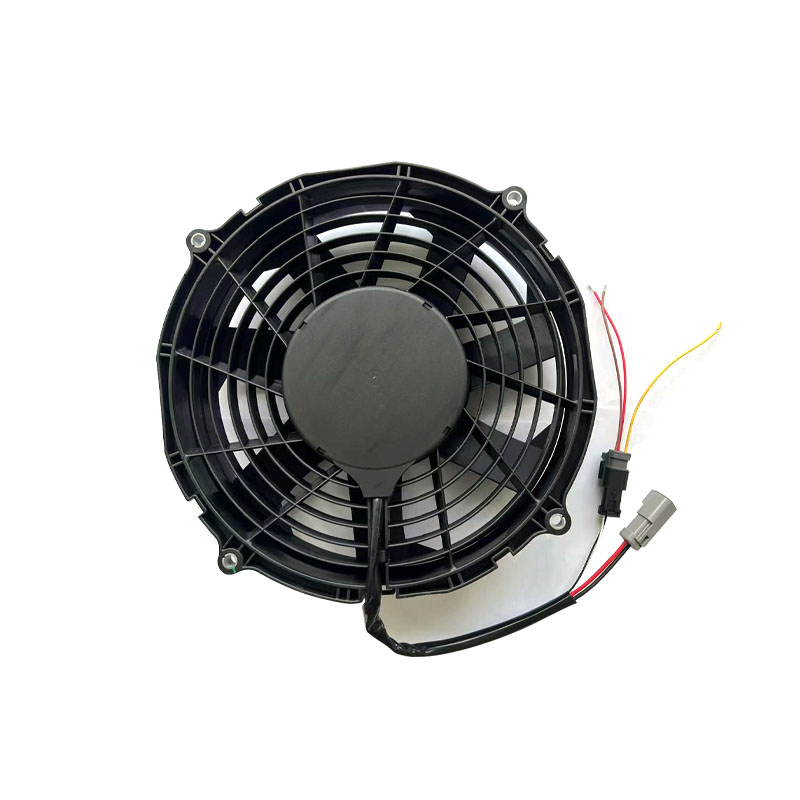
Heat is the silent enemy of every electric and hybrid vehicle. During fast charging, aggressive acceleration or sustained highway climbing, battery cells and motor windings generate thermal loads that conventional airflow cannot clear quickly enough. automotive DC centrifugal fans solve this by converting rotational energy into high static pressure, forcing air through the tight, resistive channels formed by battery module gaps, inverter fins and radiator cores. This guide examines the engineering criteria that separate a reliable thermal solution from a premature failure.
An axial fan moves air parallel to its shaft. It performs well in open spaces with low resistance, which is why it dominates consumer electronics and server racks. A centrifugal fan, by contrast, draws air into a rotating impeller and throws it outward at ninety degrees. This redirection converts velocity into pressure, producing the force needed to push air through dense obstructions.
The practical difference appears when a cooling path includes folded fins, wire mesh, foam filters or long duct runs. An axial fan rated at 120 CFM may deliver less than 30 CFM once those restrictions are installed. A centrifugal unit rated at 60 CFM with 80 Pa static pressure can maintain most of its flow under the same conditions.
Lithium-ion cells perform best between 15 and 35 degrees Celsius. Above 45 degrees, degradation accelerates. Above 60 degrees, the risk of thermal runaway rises sharply. Battery packs are mechanically dense: cells sit in close proximity, busbars add mass, and the enclosure limits airflow paths. A centrifugal fan can push cooling air through the narrow gaps between modules, carrying heat toward an exhaust vent. The high static pressure also allows the use of finer filtration, keeping conductive dust away from high-voltage connections.
Permanent magnet motors lose torque efficiency as winding temperature climbs. At 180 degrees Celsius, insulation begins to degrade. Forced convection through the motor housing or a dedicated cooling jacket requires a blower that can overcome the pressure drop of tight fin geometries. Centrifugal designs deliver the necessary pressure while maintaining a compact footprint, which matters in wheel-hub or under-hood installations.
Commercial vehicles, buses and off-highway machines use centrifugal blowers for HVAC distribution because the same high-pressure characteristic enables long duct runs with multiple outlets. Advanced driver assistance systems also benefit: cameras and lidar units mounted behind windshields or in grilles require active cleaning and cooling. A sealed centrifugal blower with an IP67 rating can survive pressure washing and road spray while keeping optical surfaces clear.
Purchasing a fan on airflow alone is a common and costly mistake. The following parameters determine whether a unit will survive its first summer and its fifth winter.
| Parameter | What to Verify | Consequence of Neglect |
|---|---|---|
| Voltage Range | Operating window, not just nominal 12V or 24V | Stall or burnout during cold cranking or load dump |
| Static Pressure | Pressure at expected system resistance | Insufficient penetration through dense fins |
| Bearing Type | Dual ball bearing versus sleeve | Noise escalation and seizure after months of use |
| Control Interface | PWM, FG tachometer, locked-rotor alarm | Inability to integrate with vehicle thermal controller |
| Environmental Protection | IP rating and temperature range | Corrosion, short circuits and mechanical failure |
A fan labeled 12V DC may be designed only for a laboratory bench supply. In a vehicle, the electrical bus fluctuates constantly. During a cold start, voltage can dip below 9.6V. During a load dump event, it can spike above 16V. A robust automotive DC centrifugal fan should operate continuously across at least 9.6V to 14.4V for a 12V system, and 19.2V to 28.8V for a 24V system. Some manufacturers specify even wider windows to accommodate start-stop systems and regenerative braking surges.
CFM ratings published on datasheets are measured in free air, with no obstruction. Real installations always add resistance: filters, bends, fins and connectors. The fan curve reveals the truth. A unit that delivers 100 CFM at zero pressure may deliver only 20 CFM at 80 Pa. For battery packs with tightly spaced modules, specify a minimum of 50 Pa at the desired operating point. For motor cooling with fine fins, 80 Pa or higher is prudent.
Sleeve bearings use a lubricated bushing and are inexpensive. They perform adequately in clean, moderate-temperature environments. In a vehicle, vibration and temperature cycling cause lubricant migration. Within six to twelve months, sleeve-bearing fans often develop growling noises and eventually seize. Dual ball bearings, by contrast, tolerate axial and radial loads, operate across wider temperature ranges and routinely achieve 50,000 hours or more. For any application that cannot tolerate downtime, dual ball bearings are the only acceptable choice.
Modern thermal management is not binary. A fan that runs at full speed whenever the ignition is on wastes energy and creates unnecessary noise. PWM input allows the controller to adjust speed based on actual temperature. FG output provides a tachometer signal so the controller can detect a stalled or disconnected fan. Locked-rotor alarm output provides an additional safety layer. These signals are not accessories; they are prerequisites for integration with a CAN bus or a dedicated thermal ECU.
Under-hood temperatures routinely reach 85 degrees Celsius and can spike higher during shutdown. Winter conditions expose components to minus 40 degrees Celsius. Thermal cycling, humidity, salt spray and vibration compound the stress. A fan intended for engine bay or underbody installation should carry an IP67 or IP68 rating. Even for cabin applications, conformal coating on the PCB and sealed connectors prevent premature failure from condensation.
The following sequence reduces selection risk and prevents over-specification.
Standard catalog products satisfy roughly seventy percent of automotive cooling requirements. The remaining thirty percent involve space constraints, electrical architectures or environmental exposures that demand modification. Customization is not a luxury; it is often the difference between a functional prototype and a production-ready thermal system.
Voltage options range from 2V to 48V DC. Control interfaces can be tailored to include PWM, FG, locked-rotor alarm or a combination. Connector types, pin assignments and wire harness lengths are matched to the vehicle harness. For high-volume programs, integrated control electronics can be moved from the fan housing to a remote driver, reducing weight and heat exposure.
Impeller geometry is the primary lever for pressure and flow characteristics. Forward-curved blades favor high airflow at lower pressure. Backward-curved blades favor higher pressure and efficiency. The housing can be modified to change outlet orientation, flange mounting pattern or overall depth. For space-constrained installations, a dual-outlet scroll may replace two separate fans.
IP rating is achieved through a combination of gaskets, sealed connectors, conformal coating and bearing selection. For salt-spray exposure, stainless steel hardware and anodized housings are available. For extreme temperature, high-temperature lubricants and insulation systems are specified. Brand labeling and laser marking are available for identification and traceability.
Providing a complete specification, including voltage window, required pressure at operating point, noise ceiling, IP rating, control interface and mounting dimensions, allows engineering teams to propose a matching configuration and provide a quotation without repeated clarification cycles.
Automotive components face validation regimes far stricter than consumer electronics. Electromagnetic compatibility ensures that the fan motor does not interfere with radio reception, navigation or safety systems. Load dump protection prevents damage when the alternator disconnects under load. Vibration testing simulates years of road input in a matter of weeks.
Buyers should request test reports rather than relying on catalog claims. A fan that passes bench testing but fails vibration or thermal shock will generate warranty costs that dwarf the initial purchase price.
Lifespan depends primarily on bearing type and operating temperature. Dual ball bearing units routinely achieve 50,000 hours or more at moderate temperatures. Sleeve bearing fans may last only 10,000 to 20,000 hours in vehicle conditions, with noticeable noise increase after the first year. Specifying dual ball bearings and verifying the operating temperature range are the two most effective ways to extend service life.
Yes, provided the fan is designed for automotive duty. Key features include balanced impellers, robust motor mounts, locked-rotor protection and vibration-resistant connectors. Fans intended only for stationary equipment may suffer bearing damage or wire fatigue within months. Always confirm that the unit has been tested to relevant vibration profiles for the target installation location.
An axial fan moves air parallel to its shaft and performs best with low resistance. A centrifugal fan draws air in and throws it outward at ninety degrees, converting velocity into static pressure. In vehicle thermal management, where dense fins, filters and long ducts create resistance, the centrifugal design maintains airflow where an axial fan would stall. The trade-off is a larger footprint for the same free-air flow rating.
Custom voltage ranges from 2V to 48V DC are available, along with a variety of connector types, wire lengths and control interfaces. OEM and ODM projects can specify PWM, FG, locked-rotor alarm or a combination. Providing the vehicle bus voltage, required control signals and harness interface allows a matching configuration to be proposed without modifying the core fan architecture.
Map the airflow path and identify every source of resistance: filters, mesh screens, fin blocks, bends and abrupt transitions. Estimate the pressure drop for each element, then sum them. Add a safety margin of twenty to thirty percent. If the total exceeds 50 Pa, prioritize static pressure over free-air CFM. A fan curve, rather than a single CFM rating, provides the data needed to verify performance at the actual operating point.
Thermal management decisions made early in a vehicle program determine field reliability and warranty exposure. To move from evaluation to a concrete proposal, provide the following parameters: supply voltage and operating window, required static pressure at the system operating point, maximum acceptable noise level, ingress protection requirement, control interface and available mounting dimensions. A configuration matched to those inputs can be proposed, along with performance data and a quotation for prototype or production quantities.
Your email address will not be published. Required fields are marked *

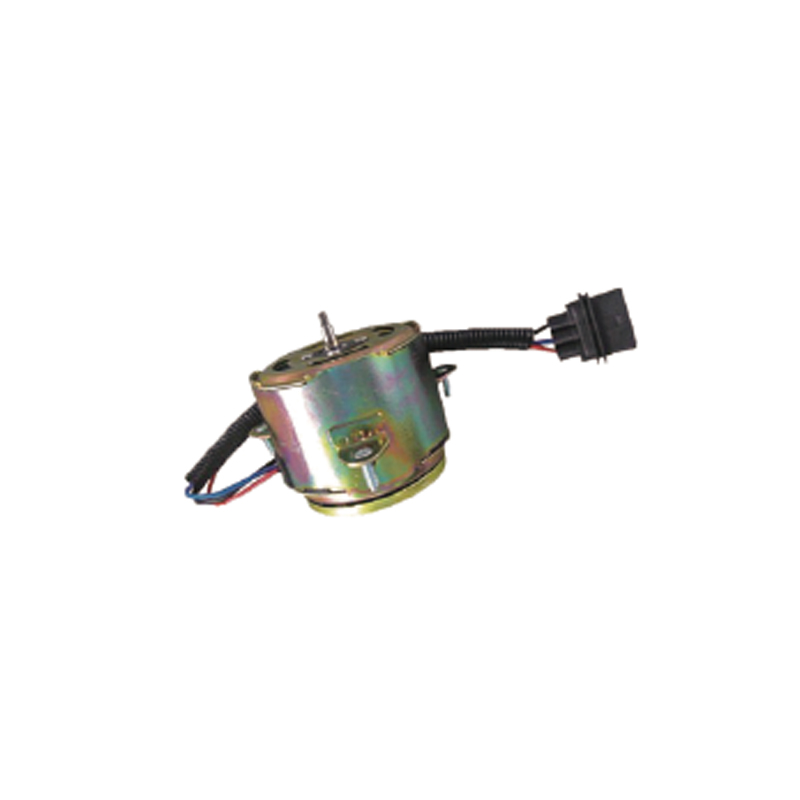
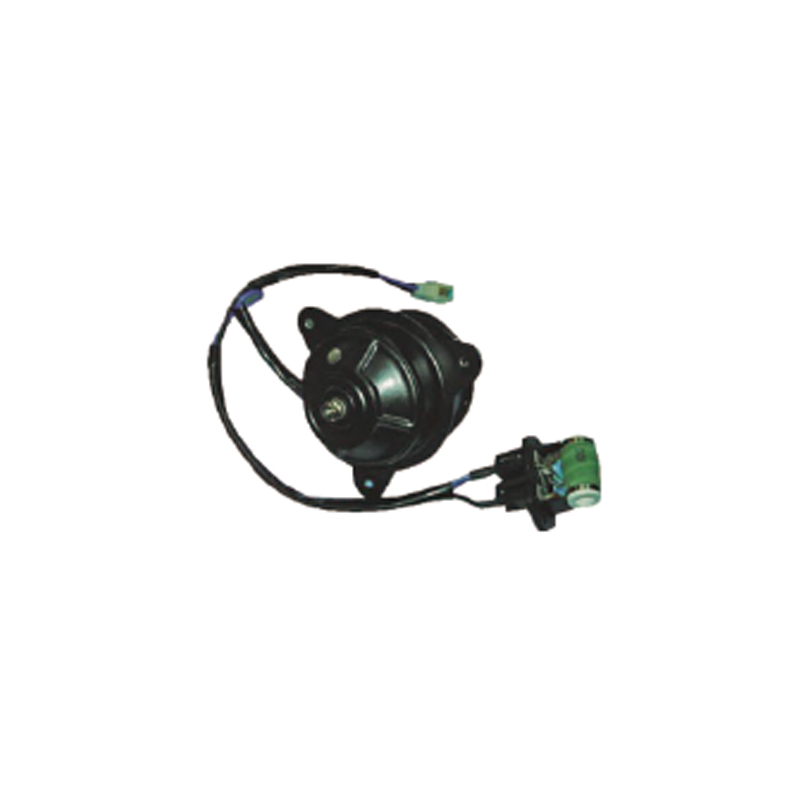
Zhejiang Nicety Electric Machinery Co., Ltd. specializes in the production of four series of products: condenser electronic fan, radiator (water tank) fan, blower, and air conditioner assembly. Professional production American, European, Japanese, Korean And Domestic brand DC automotive axial fans.
Email: [email protected] / [email protected]
Tel: +86-0578-7125439 / +86 181 0658 9231
Address:No. 98, Guangda Street, Jinsha Industrial Zone, Longquan City, Zhejiang Province, China