
 English
 Español
 عربى
عربى русский
Contact Us
Your email address will not be published. Required fields are marked *
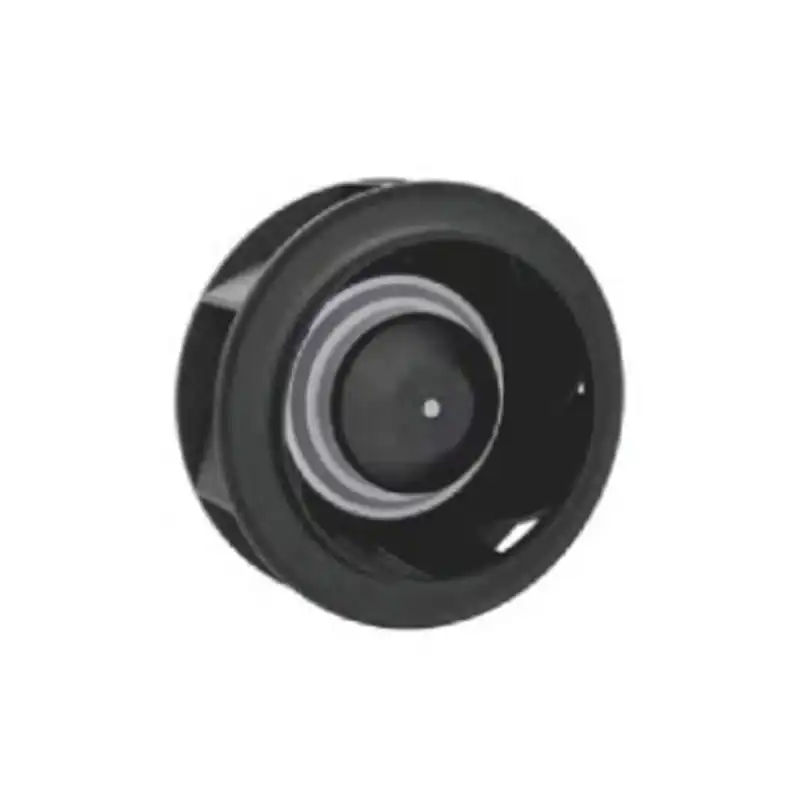
In modern ventilation and air-handling systems, the demand for higher efficiency and lower acoustic impact has never been greater. Among the effective yet often misunderstood solutions are EC backward tilting centrifugal fans. These fans combine electronically commutated (EC) motor technology with backward-curved or backward-inclined impeller designs, delivering a performance profile that significantly reduces both electrical draw and operational sound levels. Understanding the precise mechanisms behind these benefits helps engineers, facility managers, and system designers make informed choices for sustainable and comfortable environments.
To appreciate how EC backward tilting centrifugal fans lower energy consumption, one must separate the two primary components: the motor type and the blade geometry.
The EC motor is essentially a brushless DC motor with integrated intelligent control electronics. Unlike traditional AC induction motors that run at fixed speeds based on line frequency (50/60 Hz), EC motors convert incoming AC power to DC and then use pulse-width modulation to generate a rotating magnetic field. This allows precise speed regulation without the losses inherent in external variable frequency drives (VFDs). More importantly, EC motors maintain high efficiency across a wide operating range—often exceeding 85% even at partial loads, whereas an AC induction motor might drop to 50–60% efficiency when throttled.
The backward tilting impeller design complements the motor’s intelligence. As the impeller rotates, air enters axially and is discharged radially. The backward-curved blades push air outward using centrifugal force but with a blade angle that leans away from the direction of rotation. This geometry delivers several aerodynamic advantages:
| Performance Factor | Conventional Forward-Curved Fan | EC Backward Tilting Centrifugal Fan |
|---|---|---|
| Pressure buildup | Steep curve, prone to stalling | Flat, stable characteristic |
| Overload risk | High at low flow | No overload region |
| Airflow control | Requires damper or VFD | Built-in speed modulation |
| Part-load efficiency | Poor | Excellent |
The absence of an overload region means the motor draws less current even when the system restricts airflow, unlike forward-curved fans that may draw excessive power at closed dampers. This inherent characteristic directly reduces wasted electricity.
Energy savings from EC backward tilting centrifugal fans arise from three distinct pathways: motor efficiency, affinity law scaling, and elimination of external control losses.
1. Motor and drive efficiency.
A standard AC induction motor with a VFD experiences harmonic losses and typically operates at 75–82% efficiency at 50% speed. An EC motor, with its integrated commutation, achieves 88–92% efficiency across the same range. The difference is not trivial—for a fan running 8,000 hours annually at partial load, the EC variant can cut motor-related energy use by 15–20% before accounting for the fan curve itself.
2. Affinity law compatibility.
The affinity laws state that fan power varies with the cube of speed. Reducing speed by 20% lowers power consumption by nearly 50%. Because EC backward tilting centrifugal fans allow seamless speed control without external VFDs, operators can match airflow precisely to demand. This eliminates wasteful practices such as running at full speed and bleeding off excess air with dampers or bypass valves. Each 10% reduction in speed yields roughly 27% less power—a direct, repeatable saving.
3. System effect reduction.
Backward tilting blades produce a more uniform outlet velocity profile, reducing turbulence downstream. Lower turbulence means lower static pressure losses in ducts, filters, and coils. Consequently, the fan requires less rotational energy to overcome system resistance. Field measurements consistently show that replacing a conventional forward-curved fan with an EC backward tilting centrifugal fan of comparable duty can reduce total system power by 30–45%, even before optimizing controls.
High-frequency whine and low-frequency rumble are common complaints with traditional fans. EC backward tilting centrifugal fans address noise at its sources—both aerodynamic and electromagnetic.
Aerodynamic noise reduction.
Backward-curved blades generate less boundary layer separation and vortex shedding compared to forward-curved or radial blades. The air flows smoothly along the blade surface and discharges with lower turbulence intensity. This directly reduces broadband noise, especially in the 500–2000 Hz range—the intrusive for human hearing. Additionally, because the fan operates at lower tip speeds for the same duty (due to higher pressure coefficient), the dominant noise source—blade passing frequency—shifts downward in amplitude.
Elimination of mechanical and electrical harmonics.
Traditional AC motors with VFDs often produce audible magnetostriction noise (a high-pitched whine) and torque ripple at switching frequencies. An EC motor’s sinusoidal commutation scheme, combined with precise current shaping, minimizes these artifacts. The result is a smoother torque output and a reduction in electromagnetic noise levels by 5–8 dB(A) compared to VFD-driven AC equivalents under identical airflow conditions.
Operational noise at low flow.
Conventional fans at reduced flow may enter unstable regions, causing surging or rotating stall. These phenomena create rhythmic, pulsating noise that can travel through ductwork into occupied spaces. EC backward tilting centrifugal fans avoid this because the flat pressure curve and active speed feedback keep the operating point away from surge limits. Even at 20–30% of full flow, noise remains primarily aerodynamic rather than impulsive, making it less noticeable and easier to attenuate with passive silencers.
Lower energy consumption and reduced noise are not the only advantages. Several secondary effects further strengthen the case for EC backward tilting centrifugal fans.
Adopting this fan technology does not require redesigning entire air systems. EC backward tilting centrifugal fans are available in standard housing configurations (SWSI, DWDI) and can be retrofitted into existing units where motor and wheel dimensions match. For new builds, system designers can downsize heating and cooling coils because the fan delivers more consistent airflow against variable resistance—a direct consequence of the flat pressure characteristic.
Control integration is straightforward. Most EC fans accept 0–10 V, PWM, or even direct Modbus RTU signals. This allows building management systems to modulate fan speed based on CO₂ sensors, room temperature, or duct static pressure without additional interface hardware. The built-in diagnostics also provide real-time feedback on power consumption, speed, and runtime hours, enabling predictive maintenance strategies.
Some skeptics argue that the initial cost of EC backward tilting centrifugal fans is higher than simple AC alternatives. While true at component level, the total cost of ownership tells a different story. Energy savings alone typically recover the premium within 8–18 months for continuous-duty applications. Noise complaints, often resulting in expensive field modifications such as acoustic enclosures or silencers, are significantly reduced or eliminated altogether. Furthermore, without VFDs and their associated harmonic filters, the overall system cost may be neutral or even lower.
Another misconception is that backward tilting fans are unsuitable for dirty airstreams. In fact, the self-cleaning nature of backward-curved blades—where centrifugal force flings particles outward rather than allowing buildup on the blade face—makes them more robust in light dust applications than forward-curved designs. For heavy particulates, special coatings or materials are available without compromising the EC motor’s efficiency.
Reducing energy consumption and noise simultaneously is a significant challenge in electromechanical equipment, but EC backward tilting centrifugal fans achieve this through physics-based design rather than compromises. The EC motor eliminates the losses of external VFDs and maintains high efficiency at partial speeds, while the backward tilting impeller prevents overload, stabilizes airflow, and lowers turbulence-generated noise. Together, they enable precise airflow matching to real-time demand, slashing power draw by 30% or more and reducing sound pressure levels by several decibels without costly acoustic treatments.
For facility owners seeking lower utility bills and less intrusive equipment, for engineers tasked with meeting performance standards, and for occupants who simply want quiet, comfortable spaces, these fans represent a practical, proven evolution in air movement technology. The question is no longer whether to adopt them, but how quickly existing systems can be upgraded to realize the benefits.
Your email address will not be published. Required fields are marked *

Zhejiang Nicety Electric Machinery Co., Ltd. specializes in the production of four series of products: condenser electronic fan, radiator (water tank) fan, blower, and air conditioner assembly. Professional production American, European, Japanese, Korean And Domestic brand DC automotive axial fans.
Email: [email protected] / [email protected]
Tel: +86-0578-7125439 / +86 181 0658 9231
Address:No. 98, Guangda Street, Jinsha Industrial Zone, Longquan City, Zhejiang Province, China